Introduction
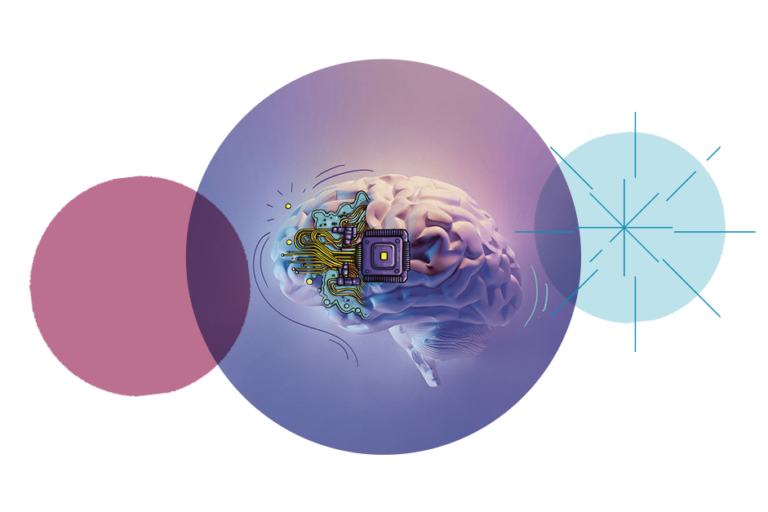
Artificial intelligence continues to push healthcare into a new era from early disease detection to large-scale data modelling. Yet expectations often move faster than real-world progress.
This interview explores a grounded, data-centric perspective from Christopher Rudolf, Founder & CEO of Volv Global, who warns that while AI holds enormous potential, the healthcare sector must remain realistic about timelines, data limitations, and regulatory constraints.
Before diving in, the original article was published on the Biopôle website: Read the original article.
Interview Summary
This interview explores the real-world challenges and opportunities surrounding the use of artificial intelligence in healthcare, particularly in rare disease detection and clinical decision-making.
Christopher Rudolf, founder and CEO of Volv Global, discusses why expectations around AI need to be grounded in the realities of poor-quality healthcare data, regulatory hurdles, and the complexity of diagnosing under-recognized conditions.
A central theme of the conversation is the gap between the promise of AI and what current datasets can realistically support. Rudolf highlights that rare diseases often take seven to ten years to diagnose, leaving large portions of patient journeys undocumented or incorrectly labelled. Feeding this flawed data into large language models leads to inaccurate outputs magnifying existing clinical errors rather than solving them.
Rudolf explains that meaningful progress is possible only when systems generate new and clean knowledge rather than relying on historical records. Volv Global’s work focuses on identifying undiagnosed patients earlier, analysing differences between diagnosed and undiagnosed groups, and improving model reliability using population-scale data across multiple countries.
The interview also examines digital twins, synthetic control arms, and the limitations of using virtual patient records for conditions with small or highly diverse populations. Regulatory pressures especially the upcoming European AI Act pose another major challenge, potentially slowing innovation due to increased compliance requirements and limited regulatory capacity.
Overall, the discussion emphasizes cautious optimism. AI has the potential to significantly benefit healthcare, but its impact will unfold gradually. System-level constraints, data quality issues, and infrastructure challenges must be addressed before AI can deliver its full value.
Interview: AI in Healthcare – Expectations vs Reality
Why did you choose to work in the areas of AI and rare diseases?
I saw a need to help clinicians with the care gaps that occur because of rare diseases. On average, it takes seven years to diagnose a rare disease. I’ve even met people who’ve been undiagnosed for 28 years. So that’s a massive care gap that means people become very ill before getting treatment, or else they’re misdiagnosed. Either way, it costs our healthcare systems a lot of time and money.
So, I saw a big opportunity to do something with AI that addresses a gap that humans are not solving very well – as opposed to trying to improve what people do well already.
I started Volv Global to use machine learning to generate new knowledge that can help us bridge these gaps by leveraging population-scale data. But at Volv Global, we also look at more common diseases with care gaps. For instance, a conservative estimate is that 10% of all women have endometriosis and it’s typically diagnosed seven to ten years too late.
How much change will AI bring to healthcare in the coming years?
There’s a lot of hype around AI and large language models (LLMs) such as ChatGPT. And this is a problem because people have unrealistic expectations. There are a lot of ideas and promises about integrating data and healthcare systems, for example. But that’s not going to happen for another 10 to 20 years. So, I don’t think it’s going to be as game-changing as people are promising, at least not in the immediate future.
Why will it take so long for LLMs to be useful in healthcare?
The data is very gappy and full of mistakes. If the reason a patient isn’t diagnosed for ten years is because clinicians are not getting it right for ten years, what’s the point of putting that into the LLM and saying ‘tell me what to do next’? It can’t get it right because the data is flawed.
When we have reliable data, LLMs can be tremendously helpful. Take contracts, for instance. There are so many millions of contracts that an LLM can do a good job of repeating them. But if you have a lot of errors in the data – and this is the case with rare diseases – the LLM is bound to give you the wrong answer. This can lead to misdiagnoses and more bad practice.
What can be done about this?
We need an approach that rectifies this by cleaning up the data. This is the only way of getting to a better outcome rather than repeating a similar one. This means generating new knowledge about diseases at speed and working out what’s been going wrong for patients.
This is what we’re doing at Volv Global. We’re trying to better understand patients with rare diseases by finding undiagnosed patients and looking at how they’re different to diagnosed patients. And because we’re finding patients at an earlier stage, this helps us understand what symptoms they might have earlier in their respective journeys. This creates new knowledge.
We’ve got access to about half a billion people’s data – from the US, the UK, Germany and the Netherlands – but it’s all anonymous. All the data stays in the country. And we develop models that use this data at scale.
Could ‘digital twins’ help to create the new data needed for clinical trials?
If you replicated the data that is written in your health record, you would have two records. In other words, you’d have a ‘twin’ of this person you’ve replicated. A digital twin is a virtual version of the person that lets doctors predict and test treatments before applying them in real life. It sounds simple enough, but it’s actually very complex.
In some cases, it can work. Notably, for a well-understood disease where we have data about many patients, you could use this data for what we call ‘synthetic control arms’. In a clinical trial, you often have a population you’re treating and a population you’re not treating (who receive a placebo). But this might not be ethical – because there are good treatment options – or it might not be possible – because the disease is rare and you don’t have enough patients. A synthetic control arm instead uses data from external sources – for instance, digital twin records.
But what we’ve found for the diseases we look at is that there aren’t enough patients to create a good representation. And often, populations are so heterogeneous that it’s very difficult to create a twin of them.
How difficult was it to design an AI solution for the heavily regulated markets of healthcare and clinical trials?
It was difficult to come up with a market positioning and a solution positioning. It took me two or three years to think it through completely.
We had to find a way of providing solutions for people while maintaining a regulatory position that would reduce risk and prioritise the safety of patients.
Are there any big hurdles?
The European AI Act is a huge hurdle which could make it more difficult to do business in Europe. The EU wants to bring in these new regulations in 2027, but they’re never going to be ready for it. They don’t have the capacity to regulate it, or enough qualified people to take up the jobs that would be required.
And there’s already a two-year backlog for the current regulations for medical devices. I’ve spoken to investors in the US who say they will actively not invest in European companies and medical devices. So that’s a big issue.
Regulation is important, but it should be actionable and doable. Creating statements saying you’re going to do certain things by a certain time without having the capability to do so is absurd.
What’s the most important thing readers should take away from this interview?
I believe AI can be a huge help when it comes to solving the challenges our healthcare systems are facing. But we also have to be realistic. My experience in this area makes me both enthusiastic about AI’s potential and realistic about what we can expect – because the problems we’re facing are complex.
Changes and sprints are happening in different areas, but a blanket solution isn’t possible. There are too many problems to solve. And the solutions we need involve changes in infrastructure, medical teams and all kinds of other areas. Large human systems are not easy or cheap to change. It will happen, but it will take time and hard work.
Key Insights From the Interview
- AI’s role in healthcare is growing, but progress is slower than public expectation.
- Rare diseases suffer from flawed, sparse datasets, making AI training challenging.
- Early detection requires generating new, high-quality knowledge, not just reusing existing records.
- LLMs will take 10–20 years to integrate meaningfully due to data quality issues.
- Regulations like the European AI Act will increase friction for innovators.
Why Data Quality Is the Central Issue
One of the strongest themes highlighted is the gap between AI capability and the quality of healthcare data. Most clinical records are inconsistent, heterogeneous, and incomplete — especially in rare diseases. This limits prediction accuracy, model reproducibility, and safe deployment. Rudolf’s emphasis is clear: before expecting AI to diagnose or predict outcomes reliably, healthcare must invest in systematic data improvement.
Frequently Asked Questions
Why is AI adoption in healthcare slower than expected?
Data fragmentation, regulatory constraints, and inconsistent clinical records slow down deployment.
What is Volv Global focus in AI?
Using machine learning to uncover previously invisible care gaps and improve early detection of rare and common diseases.
What challenges limit the use of LLMs in diagnostics?
LLMs trained on flawed clinical data will repeat the same mistakes clinicians make — making errors more likely in real settings.
What are digital twins in healthcare?
Digital twins create synthetic patient models for simulations, often useful when patient populations are too small for traditional trials.
Is AI expected to replace doctors?
No. The interview reinforces that AI augments clinical decision-making but cannot replace medical expertise.
Christopher Rudolf is a seasoned technology entrepreneur and business advisor with over 30 years of experience, specialising in data science, AI and medical informatics. As the founder and CEO of Volv Global SA, he leads the company’s mission to transform healthcare through advanced machine learning methodologies, enabling early disease detection and precision medicine. His career has also included designing global-scale data solutions for leading pharmaceutical companies. A recognised expert in life sciences data strategy, Christopher has received awards for his contributions, including the CSC Ingenious Mind accolade with Dr Robert Wah. He also shares his expertise as a visiting professor at EPFL and UNIL, guiding executive management on how to harness data for strategic decision-making.