By Léon van Wouwe, Clinical Innovation Director, Volv Global
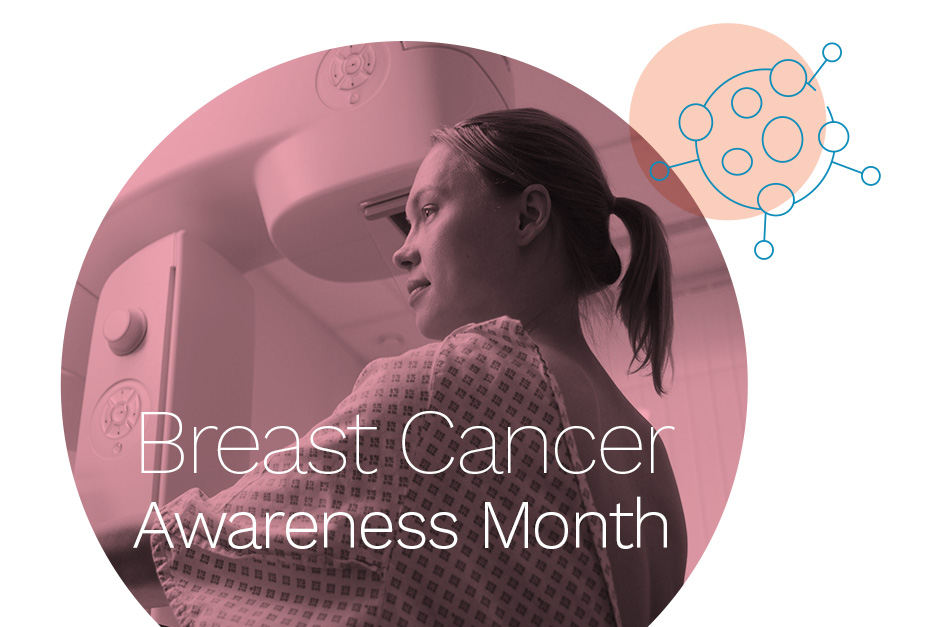
Breast Cancer Awareness Month 2026: every story is unique, every journey matters
This October the WHO has chosen a theme that I often return to: every story is unique, every journey matters [1].
It sounds like a sentiment. And it is. As a pre- and early teenager, I grew up facing the very real prospect of losing my mother to breast cancer. Thankfully, my mother, now in her 80s, is a long term breast cancer survivor.
The theme is also a technical brief. That is because almost everything we use to decide how a woman with breast cancer is diagnosed and treated rests on population-level evidence: the average stage seen across a population, the average risk of recurrence across a population, the average benefit of the next drug across a population. Each describes the group average, and none describes the full journey of an individual woman. My mother, for one, defied the statistics that defined her outlook at the time when breast cancer care was far less advanced than it is now.
For a long time, I thought of breast cancer as the success story of oncology. And not just because my mother is still with us today: screening is now well organised, leading to high survival. My mum’s sisters, as well as my own sister all got screened because of mum’s experience and were bale to enter long-term follow-up programmes long ago. Since then, breast cancer has become one of the best-funded research fields there is. In wealthy health systems, much of that is true. But the closer you look at individual journeys, the less the population-level picture holds.
Stage at diagnosis still shapes survival more than almost anything else
In the United States, a woman whose breast cancer is found while still localised has a five-year relative survival of 100%. If it is only found once it has spread to distant organs, that figure is 33.8% [2]. It is the same disease, but detected at a different moment. Figures from the Netherlands, where I am originally from, show the same steep survival gradient: five-year relative survival is 99% for stage I breast cancer and 37% for stage IV [3].
And the late-stage problem is not easing. An analysis of more than 760,000 US diagnoses published this year shows stage IV incidence rising 1.2% a year between 2010 and 2021 [4]. In England, about three in ten women invited for screening do not attend [5]. Overall incidence is also rising about twice as fast in women under 50 – most of whom fall outside screening age – as in older women [6]. And globally, the WHO is explicit that stage at diagnosis is a key predictor of long-term survival [7].
That is why the WHO Global Breast Cancer Initiative puts stage first among its three targets: at least 60% of invasive breast cancers are diagnosed at stage I or II [1].
AI has already shown it can help inside the screening programme. In the MASAI trial in Sweden, AI-supported reading raised sensitivity from 73.8% to 80.5% without losing specificity [8]. But screening reaches only the women who attend, at the ages invited and the intervals set. The rest of the journey happens elsewhere: in GP consultations, prescriptions, referrals, imaging requests, symptoms recorded and not yet connected.
This is where inAdvance applies. Its AI models are designed to analyse the patterns in those routine patient journeys and inform healthcare professionals’ decisions about which patients to consider for testing, earlier, while the disease is more likely to be at a stage where treatment outlook is best. The purpose is to complement screening and to reach the women it otherwise would not.
We have seen how far upstream routine data can reach. Gastroenteropancreatic neuroendocrine tumours (GEP-NETs) are a rare, difficult-to-diagnose cancer for which patients typically wait nearly five years from first symptoms to a confirmed diagnosis [9]. Applied to some 24 million de-identified UK primary care records, our inTrigue methodology pointed to an undiagnosed population 5 to 7 years younger than patients at the point of diagnosis [9, 10]. That study was not in breast cancer, and a younger age does not prove an earlier stage, so it serves only as an example from another cancer. Even so, routine records may carry signals of earlier disease stages, an intriguing possibility we hope to confirm in future projects.
The same logic has to work beyond well-digitised health systems. In low-income countries, 41.9% of women are expected to survive at least five years after a breast cancer diagnosis, against 87% in high-income countries [1]. That is why the next step could be researching how to build generalisable models that perform reliably in low- and middle-income settings.
The typical journey is rarely typical
The WHO theme says that behind every diagnosis is a person, a family and a unique journey [1]. In data terms, that journey is a sequence: what happened, in what order, with what gaps in between.
Much of what the field knows about “the typical breast cancer patient journey” comes from clinical trials and registries. Both are valuable. However, neither shows the detours: the months between first symptom and referral, the treatment that was started and quietly stopped, the follow-up that never happened.
In one example, across 26 studies of women prescribed adjuvant endocrine therapy, an average of one in three was no longer taking it as prescribed by the fifth year [11]. The trial shows the drug works. The journey shows how many women stop receiving what the trial measured.
When our data science team analyses real-world journeys at scale, this is the kind of insight that emerges. We generate new knowledge at speed, turning “the typical patient” into many recognisable patterns, each with its own risks and its own points where care could be improved.
The journey does not end with first-line treatment
Completing first-line treatment is a milestone. For many women, the journey still continues.
For hormone receptor-positive disease, recurrences continue at a steady rate from five to twenty years after diagnosis, with distant recurrence risk ranging from 10% to 41% depending on tumour size, nodal status and grade [12]. In studies following women for ten years or more, close to a quarter of those diagnosed with non-metastatic breast cancer went on to develop metastatic disease [13]. In the US alone, more than 140,000 women live with metastatic breast cancer, and most of them were first diagnosed at an earlier stage [14].
So the question of what comes next, which adjuvant therapy, whether to escalate, when to switch, is among the most consequential in her journey.
The therapies available to answer it have moved outcomes forward. In monarchE, adding abemaciclib to endocrine therapy improved five-year invasive disease-free survival by 7.6 percentage points [15]. In NATALEE, ribociclib added 4.5 points at five years [16]. Clinicians prescribing these drugs, and the companies that developed them, are acting on the best evidence available at the time.
But that evidence is measured across populations. Within them, it is not yet possible to predict in advance which women will benefit most. Some see a meaningful improvement in outcome. Others carry the side effects and the burden of treatment for a smaller return.
The next step would then be to tell them apart.
We have seen that step taken before. Gene expression scores showed that most women in the TAILORx trial with node-negative, hormone receptor-positive disease could forgo chemotherapy without loss of benefit [17]. Individual risk changed the decision. And SERENA-6 has now shown the value of acting on a molecular signal of resistance before the disease visibly progresses, rather than after, with quality of life preserved for longer [18].
That is the question inFlow is designed to address: individual outcome risk prediction drawn from the patient’s own journey, so that doctor and patient can make the decision about what follows first line treatment earlier, with time to weigh benefits against burdens, before progression forces the choice.
If you work in pharma
If you work in pharma, you may also be interested in what this means for launch and lifecycle strategy.
Early-line and adjuvant launches in breast cancer depend on identifying the right patients at the right moment. A woman diagnosed at stage IV is no longer a candidate for a curative-intent adjuvant regimen. A high-risk patient who is not recognised as high-risk may never be considered for one. Earlier detection can widen the population for whom early-stage therapies are an option at all. Individual outcome risk prediction can sharpen who is most likely to benefit, which supports trial enrichment, label strategy and the evidence of absolute benefit that payers and HTA bodies weigh. And knowing how patients actually move through care, where they stop, switch or drop out, informs lifecycle decisions well before the next indication is filed. The entry point need not be large: a retrospective analysis of existing real-world data is often enough to show where the journey diverges from the plan.
Every journey, seen
Routine breast cancer screening commonly begins around age 50, although eligibility varies by country. European Union guidance recommends mammography for women aged 50–69, and suggests extending the range to 45–74 [19]. In the Netherlands, the national programme invites women aged 50–75 inclusive for mammography, normally every two years. Current staffing shortages mean the interval can extend to approximately three years. Participation is free and voluntary [20]. Even if it had existed back then, my mum would not have been in an age group which called for screening; she was only in her early to mid-thirties when first diagnosed.
So, the aim is earlier detection, a fuller picture of the journeys patients live than trials and registries alone provide, and decisions about the next line of therapy made for the individual, and made in time. These three ambitions are the same, applied at different points of a single journey.
The WHO asks us to remember that behind every diagnosis is a person. Much of the data to see that person already exists in routine healthcare records. The question this October is whether we are willing to read it as the record of each individual’s own journey.
Where in the breast cancer journey do you see population-level evidence falling short for the individual patient?
About the author
Léon van Wouwe is Clinical Innovation Director at Volv Global SA, working with pharmaceutical partners on patient identification, care-gap analytics and real-world evidence in rare disease and oncology.
Links:
- Volv Global inTrigue – Finding more patients
- Volv Global inAdvance – Finding patients earlier
- Volv Global inFlow – Predicting patient outcomes
- Volv Global Disease Directory: Breast Cancer
References
- World Health Organization (2026) Breast Cancer Awareness Month 2026: every story is unique, every journey matters.
- National Cancer Institute SEER Program (n.d.) Cancer stat facts: female breast cancer.
- kanker.nl (2026) Overlevingscijfers van borstkanker. Compiled with the Integraal Kankercentrum Nederland (IKNL), using Netherlands Cancer Registry data.
- Avila, J. et al. (2026) ‘Stage IV breast cancer incidence and survival, 2010–2021’, JAMA Network Open, 9(5), e2612042. doi:10.1001/jamanetworkopen.2026.12042.
- NHS England (2026) Women attending first NHS mammogram hits 10-year high as thousands more cancers found. February.
- Giaquinto, A.N. et al. (2024) ‘Breast cancer statistics 2024’, CA: A Cancer Journal for Clinicians, 74(6), pp. 477-495. doi:10.3322/caac.21863.
- World Health Organization (2026) First global breast cancer survival estimates show wide regional and income disparities. 8 July.
- Gommers, J. et al. (2026) ‘Interval cancer, sensitivity, and specificity comparing AI-supported mammography screening with standard double reading without AI in the MASAI study: a randomised, controlled, non-inferiority, single-blinded, population-based, screening-accuracy trial’, The Lancet, 407(10527), pp. 505-514. doi:10.1016/S0140-6736(25)02464-X.
- Volv Global (2026) Finding GEP-NET patients earlier: AI-driven patient detection in UK primary care. Case study, 25 June.
- Volv Global (2026) Press release: AI-driven patient detection surfaces approximately 1,200 likely-undiagnosed GEP-NET patients in UK primary care. 29 June.
- Yussof, I. et al. (2022) ‘Factors influencing five-year adherence to adjuvant endocrine therapy in breast cancer patients: a systematic review’, The Breast, 62, pp. 22-35. doi:10.1016/j.breast.2022.01.012.
- Pan, H. et al. (2017) ‘20-year risks of breast-cancer recurrence after stopping endocrine therapy at 5 years’, New England Journal of Medicine, 377(19), pp. 1836-1846. doi:10.1056/NEJMoa1701830.
- Morgan, E. et al. (2024) ‘Metastatic recurrence in women diagnosed with non-metastatic breast cancer: a systematic review and meta-analysis’, Breast Cancer Research, 26(1), article 171. doi:10.1186/s13058-024-01881-y.
- Gallicchio, L., Devasia, T.P., Tonorezos, E., Mollica, M.A. and Mariotto, A. (2022) ‘Estimation of the number of individuals living with metastatic cancer in the United States’, Journal of the National Cancer Institute, 114(11), pp. 1476-1483. doi:10.1093/jnci/djac158.
- Rastogi, P. et al. (2024) ‘Adjuvant abemaciclib plus endocrine therapy for hormone receptor-positive, human epidermal growth factor receptor 2-negative, high-risk early breast cancer: results from a preplanned monarchE overall survival interim analysis, including 5-year efficacy outcomes’, Journal of Clinical Oncology, 42(9), pp. 987-993. doi:10.1200/JCO.23.01994.
- Crown, J. et al. (2025) ‘Adjuvant ribociclib plus nonsteroidal aromatase inhibitor therapy in patients with HR-positive/HER2-negative early breast cancer: 5-year follow-up of NATALEE efficacy outcomes and updated overall survival’, ESMO Open, 10(11), 105858. doi:10.1016/j.esmoop.2025.105858.
- Sparano, J.A. et al. (2018) ‘Adjuvant chemotherapy guided by a 21-gene expression assay in breast cancer’, New England Journal of Medicine, 379(2), pp. 111-121. doi:10.1056/NEJMoa1804710.
- Bidard, F-C. et al. (2025) ‘First-line camizestrant for emerging ESR1-mutated advanced breast cancer’, New England Journal of Medicine, 393(6), pp. 569-580. doi:10.1056/NEJMoa2502929.
- European Commission (2022) European Health Union: Commission welcomes adoption of new EU cancer screening recommendations. Press release IP/22/7548, 9 December.
- National Institute for Public Health and the Environment (RIVM) (2026) Breast cancer screening programme. Page modified 21 September 2026.